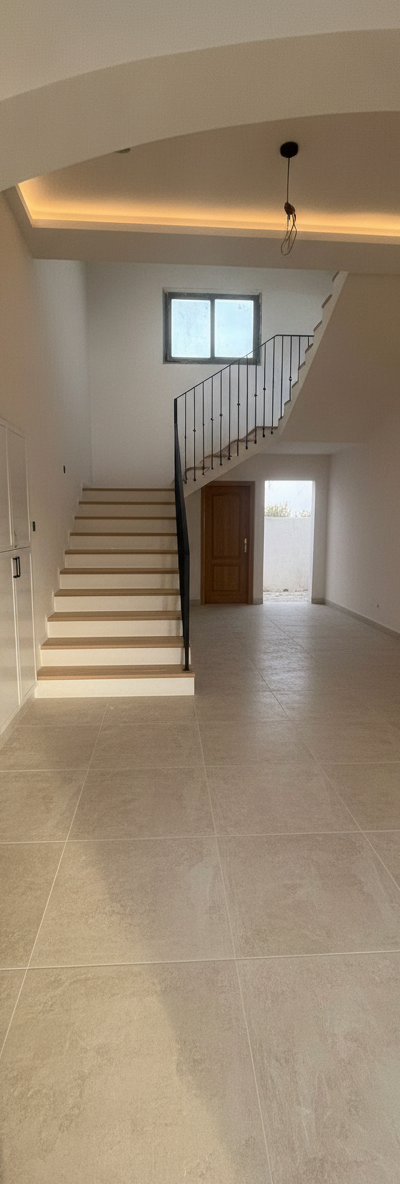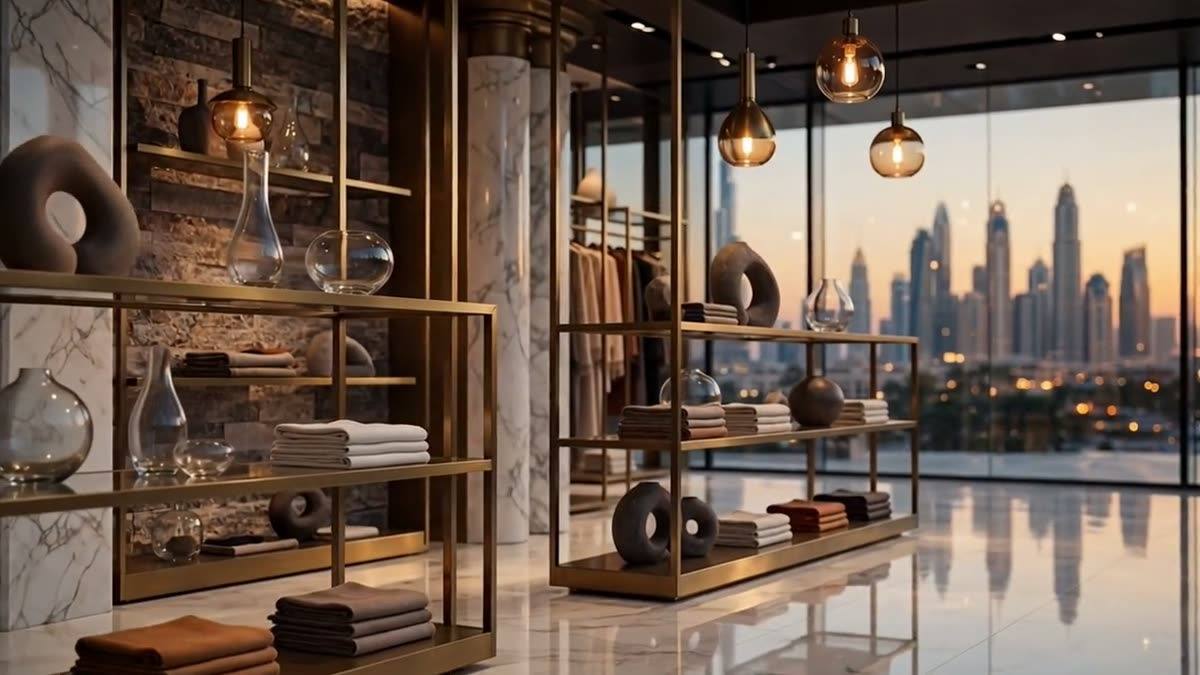
Mall kiosk fit out Dubai: approvals, timeline and cost
A mall kiosk in Dubai is not a small shop unit. You inherit a floor area, a power allocation and a rulebook, and everything above the slab is yours to design, fabricate, install and get approved. Most opening dates are lost in the gap between the mall's design review and the authority permits, so here is the order the job actually runs in.
What a kiosk fit-out involves that a shop unit does not
In a shop unit you fit inside existing walls, with a base build behind you: ceiling grid, sprinklers, toilets, sometimes floor boxes. A kiosk has none of that. The structure, counter, canopy, lighting and signage are self-supporting, and every service is brought to the unit on the mall's terms.
Weight comes first. A stone or solid surface counter with a glass display case on top can approach the slab loading a mall allows for a kiosk, so the frame is designed to spread load across a base plate rather than through four adjustable feet, and the mall's structural reviewer sees that calculation before anything is cut in the workshop.
Power arrives from a mall distribution board or through a sub-meter installed to the mall's specification. The cable route, isolator position, meter enclosure and reading arrangement are set by the mall's facilities team. F&B kiosks add a water supply and a drain, and the drain has to fall to a connection point the mall nominates, sometimes several metres away under a finished floor.
Sightlines are the third rule. Malls cap overall kiosk height and often the fascia depth so nothing blocks a view to an anchor tenant, and the finished face has to read correctly from the concourse, from the escalator and from the level above.
Almost all of the unit is built in a workshop rather than on the mall floor. Monde runs an in-house workforce of 50+ specialists under its own licence, so joinery, MEP and finishing sit with one project manager instead of three subcontractors meeting for the first time at 2am.
The approval chain in the order it really runs
Start with the mall. Its design and visual standards submission is a comment process, not a single sign-off. Two rounds is normal, three is common, and each round costs whatever days it sits in a queue.
Here is the part nobody explains. That review runs in parallel with the authority submissions, and it can stall them. A Dubai Municipality fit-out permit submission usually needs the mall's no objection certificate on the drawing set, and civil defence drawings need the same. You are not choosing between mall approval and authority approval. You are managing two queues that touch.
Once the mall's comments close, drawings go to Dubai Municipality for the fit-out permit, then to DCD civil defence for the kiosk services: fire alarm devices and their tie-in to the base building system, extinguishers, and material certificates for the finishes you plan to use. DEWA connection or sub-meter installation is arranged through the mall's facilities team, often on a separate work order. Inspection comes last: the mall snag walk, the authority inspections, then the trading no objection certificate. None of it can be booked until the physical work is complete, which is why a decision taken in week one decides whether you trade in week four.
One practical note for brands rolling out across the UAE: drawings prepared for a Dubai mall are not automatically reusable in Abu Dhabi or Sharjah, because the municipality and civil defence process in each emirate has its own submission set. Budget a separate approval cycle per emirate.
Off-site fabrication versus building on site
Mall access for fit-out is usually a night window after trading, so site hours are for installation, not construction. If it can be built in a workshop, build it in a workshop.
A straight or L-shaped counter with a solid surface top, back-lit fascia and standard joinery suits prefabrication and a three to four week programme: delivered in sections, installed over a handful of nights, inspected, trading. A closed kiosk with a canopy, integrated refrigeration and a coffee station is still an off-site build, but equipment commissioning and the wet connections add nights and add approval steps.
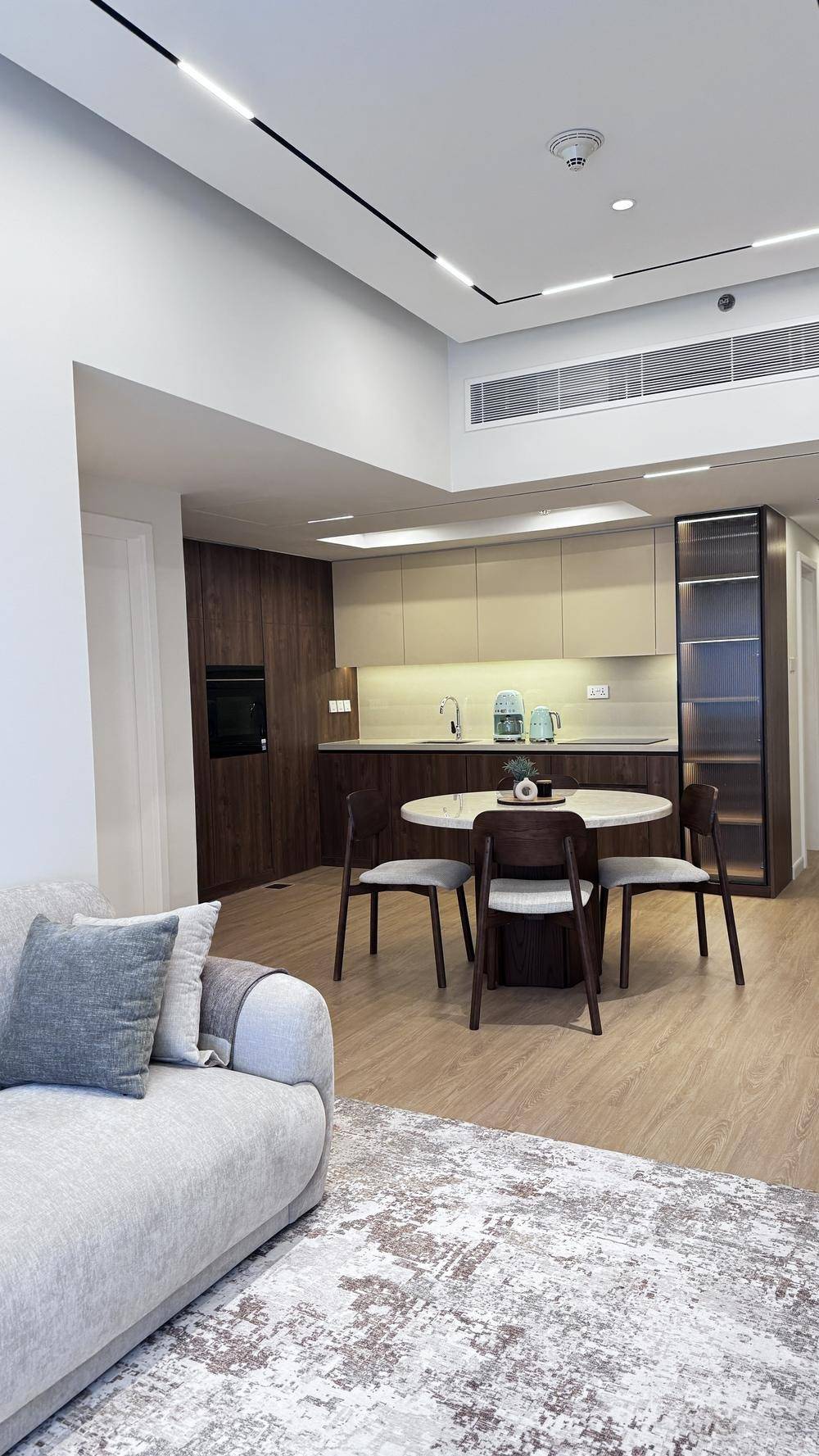 Joinery, track lighting and finishing from a completed Monde interior. Kiosk fronts are built to the same tolerances.
What breaks the date: curved or structural glass, a bespoke ceiling feature, imported display cases, and any finish whose civil defence material certificate has not been issued. F&B drainage is the other one. A grease trap and floor drain cannot be prefabricated, they need a mall works permit, and that permit has its own lead time. If your opening depends on hot food, the drain is the critical path, not the counter.
The site was clean when they left. We needed them fast on a running job. They finished the renovation on time. Good work from start to end. Davranbek, 5 stars
Monde's Google rating is 5 from 4 reviews. Retail tenants can see Monde's retail and F&B fit-out projects to judge the finished standard before committing to a drawing.
What drives the price, line by line
There is no honest single figure for a kiosk. A quote should separate the joinery carcass and counter top in the material you chose, display cases and refrigeration, the MEP package including the length of the power run from the mall board, the sub-meter, data, water, drain and grease trap, fire alarm devices and their connection, the illuminated fascia and lettering, and the accent lighting.
Then the mall's own charges. Design review fees, supervision charges, security deposits, insurance, work permits, night access passes, temporary power, rubbish removal and worker ID badges vary from mall to mall and are often billed at cost. A lump sum that hides them is not a cheaper quote, it is an incomplete one.
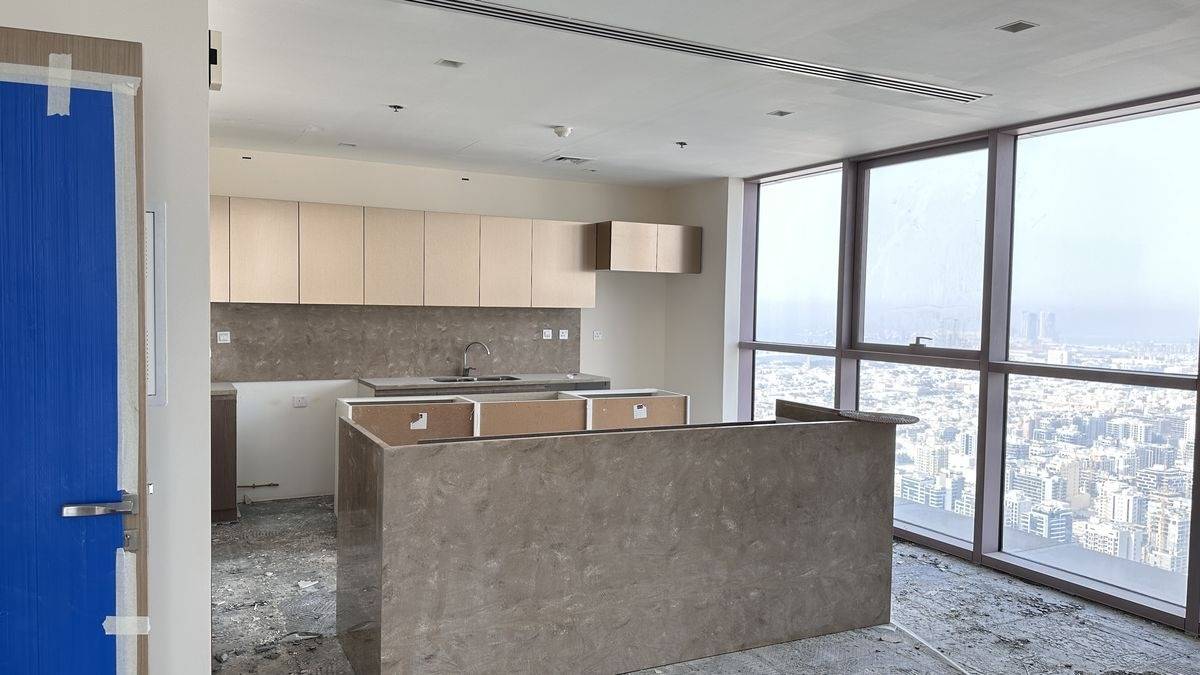 Mid fit-out on a Monde kitchen: services first, then finishes. A kiosk follows the same sequence in a tighter footprint.
Two lines buyers forget. Access and permits on a mall job are real money, not admin. And most kiosk leases oblige you to remove the unit and make good the floor at the end of the term, so price dismantling and reinstatement at the start rather than discovering it in year three.
A number for your kiosk comes from a site visit and a review of the mall's design criteria, not from a rate per square metre. If you have not signed the lease yet, more retail and F&B fit-out guides cover the design and lease decisions worth settling first.
Protecting your opening date
Freeze these before fabrication starts: counter dimensions and heights, fascia design and final logo artwork, finish samples, the equipment schedule with each item's power and water demand, and the mall's written approval of all of it. Late changes usually come from artwork that lands after the joinery is cut, or a coffee machine chosen after the power was drawn.
Put four things in the contract. Who submits to the mall and by when. How many comment rounds are included. What happens to cost and programme if the mall asks for a change after fabrication. And who carries the make-good at exit. Add the night access arrangement, because a contractor not set up for night work will slip the whole programme.
To price your kiosk, send the mall's design criteria document, your floor plan with dimensions, the kiosk location and level, the equipment list, the opening date the mall has given you and a few phone photos of the space. Send those items on WhatsApp to +971 54 494 1092 and you can get a kiosk fit-out site visit from Monde arranged around the mall's access hours.
Frequently asked questions
How long does a mall kiosk fit out take in Dubai?
A standard counter kiosk suits a three to four week programme once drawings are approved and the unit is fabricated off site. Mall comment rounds, night access windows and civil defence inspection sit outside that, so calendar time from signed lease to trading is usually longer than the build itself.
Who approves a retail kiosk design in a Dubai mall?
The mall's own design and visual standards team approves first, then Dubai Municipality issues the fit-out permit and DCD civil defence approves the services and finish materials. The mall's no objection certificate is normally required inside the authority submissions, so the two processes run together rather than one after the other.
Do I need a Dubai Municipality permit if the mall already has a building permit?
Yes. The building permit covers the base building, not your unit. A kiosk needs its own fit-out permit, its own civil defence submission for the fire alarm tie-in and finishes, and a separate connection or sub-meter arrangement made through the mall.
Can a kiosk be built off site and installed overnight?
That is the normal method. Joinery, counter, canopy and fascia are built in a workshop, delivered in sections and installed inside the mall's night access window, with MEP connections and commissioning done in the same window. It shortens site time and reduces the disruption charges a mall applies.
What should I send a mall kiosk contractor in Dubai for a quote?
Send the mall's design criteria document, a floor plan with dimensions, the kiosk location and level, your equipment list, the opening date and photos of the space. Add the lease clause on make-good if you have it. That is enough to price the fabrication and the MEP scope without guessing.