Mall kiosk fit out in Dubai: what approvals take
A mall kiosk fit out in Dubai rarely fails on the counter build. It stalls in the landlord's design review, in contractor induction, and in the few night hours when a trading mall lets you move materials. Run it as an approval project that happens to include joinery, and the opening date stays where the lease put it.
What a kiosk fit out actually includes
The footprint is small. The scope is not.
Joinery carries most of the value: base counter, back unit, till and drawer storage, plus the fascia. Under the counter sit the distribution board, data drops for the POS and card terminals, and cable management tidy enough to pass inspection. F&B units add a water feed, a waste connection, a grease trap where the menu needs one, and ventilation sized to the coffee or cooking equipment.
Above the counter, lighting and branding panels do the selling, so the illumination plan belongs in the submission, not on site. A kiosk that glares down a long concourse comes back with comments.
Small items hold up handover more often than big ones: the fire extinguisher in the position the landlord specifies, no stock above the counter line, a back of house that reads as finished when the inspector steps behind the unit. It is the same work we describe in retail fit out in Dubai, with one difference. A shop unit is yours to reconfigure. A kiosk is not.
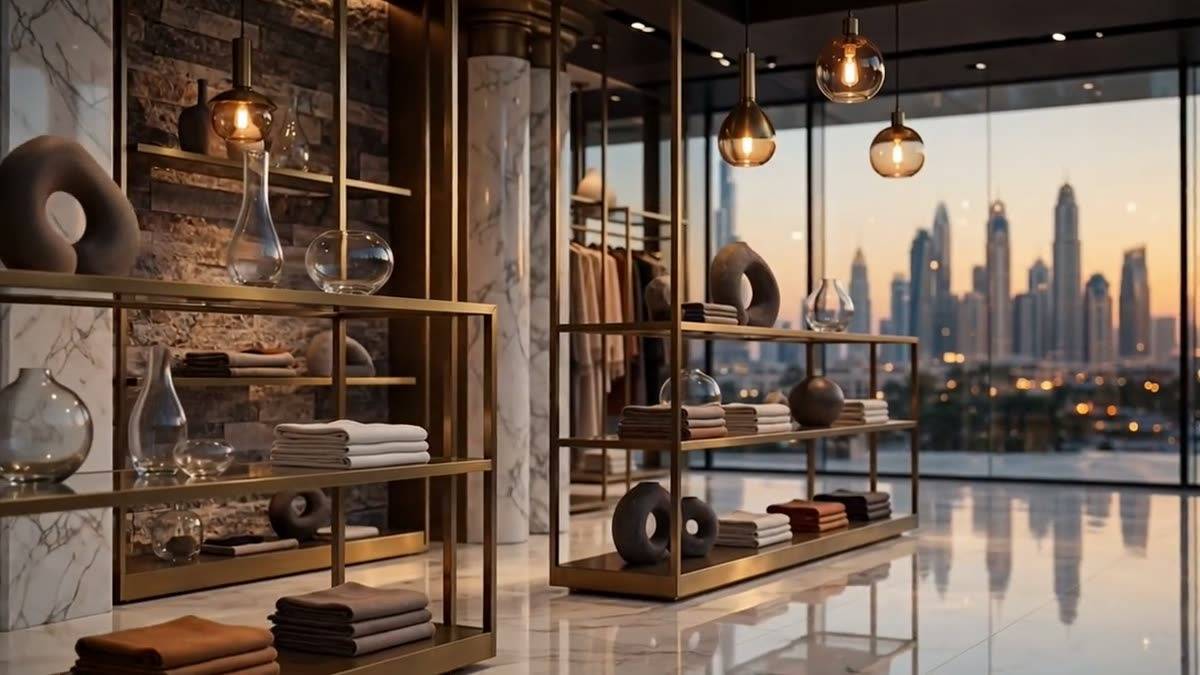 Cabinet and display joinery with layered LED lighting, the finish a kiosk counter is judged against at inspection.
The unit decides the design, not the other way round
Footprint, height, setback and fascia width come from the landlord. Fit your equipment to those numbers, not the reverse. Sightlines are reviewed as hard as drawings: illuminated panels aimed into a neighbouring tenant, or a screen blocking a mall camera, get refused.
No structural changes, no ceiling alterations beyond approved points. Fixings into the mall floor usually need approved anchors or ballast, and floor loading matters once fridges, ice machines and a water tank share a few square metres. Retail kiosk design approval in Dubai runs through the mall's own committee before any authority sees the file, so ask for the design criteria document before you brief a designer. It answers most of this in writing.
The approval chain, and the access rules that run alongside it
Each step unlocks the next.
- Design review submission to the mall design review committee: concept, then shop drawings, MEP layouts and signage details.
- Comment cycle and resubmission until the drawings are stamped.
- Landlord NOC, gate pass and contractor registration.
- Contractor induction, insurance certificates and worker IDs for everyone entering the building.
- Authority permits for the mall's zone, plus food safety registration and Civil Defence approval for any food or drink kiosk. DEWA, if the unit needs a power upgrade.
- Installation, joint inspection, snag close-out.
Which authority issues the permits depends on the zone the mall sits in, so read the commercial fit out permit approval map before you commit to a date.
Access shapes the programme as much as the drawings do. Most malls allow kiosk work after trading hours only, through a named service corridor and goods lift, with hoisting booked into a dock slot. Dust screens go up before the first cut, noise stops at an agreed hour, and every material leaving the unit needs a pass. Pick a kiosk fit out contractor in Dubai who holds its own licence and inducts its own workers, because each extra subcontractor is another induction and another insurance certificate to chase.
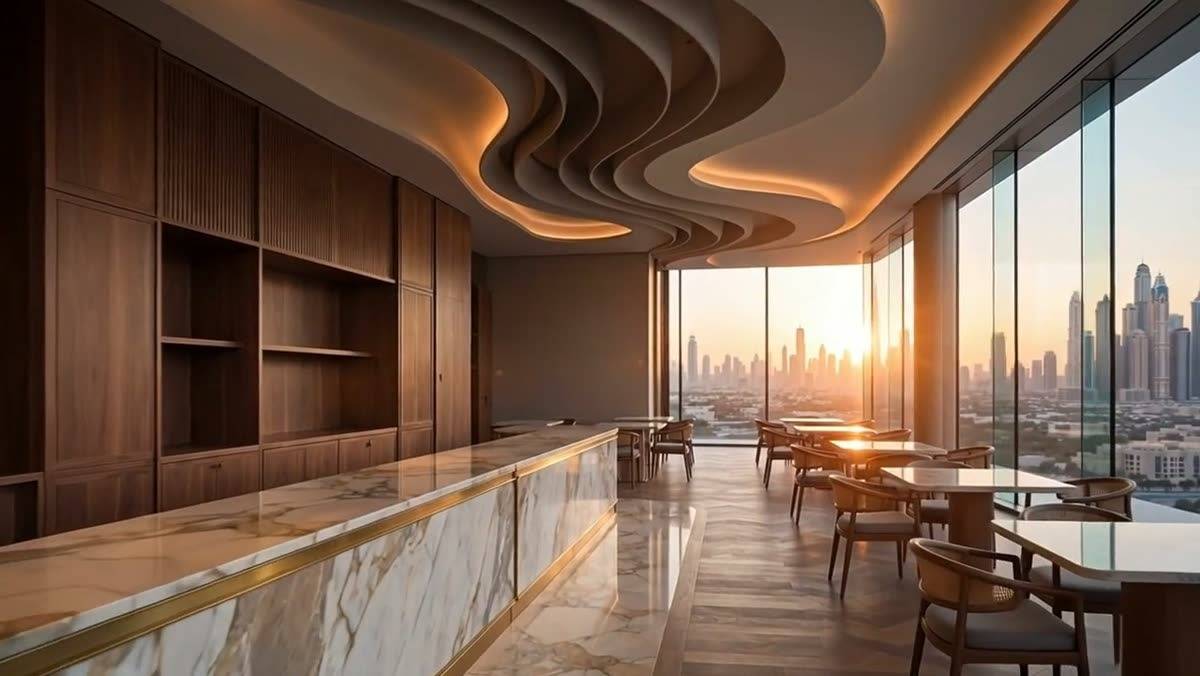 Fit-out works inside a live commercial unit: protection up, access booked, trades sequenced.
What a realistic timeline looks like, and what a fair quote itemises
The cost to build a mall kiosk in Dubai is driven by review cycles and night hours as much as by joinery. These are the ranges we plan against. They move with the mall's review speed, and fabrication should not start before drawings are stamped.
| Stage | Dry retail kiosk | F&B kiosk |
|---|---|---|
| Design review and drawing cycle | 2 to 4 weeks | 3 to 6 weeks |
| Joinery fabrication | 3 to 5 weeks | 4 to 6 weeks |
| MEP and authority approvals | 1 to 2 weeks | 3 to 5 weeks |
| Site installation | 4 to 8 nights | 8 to 15 nights |
| Inspection and snagging | 1 to 2 weeks | 1 to 2 weeks |
A fair quote breaks the job into lines you can check, not one lump sum: design and shop drawings with an allowance for one resubmission; joinery fabrication split by counter, back unit and fascia; MEP for power, data and drainage; signage and branding panels; permits and authority fees shown as a pass-through line; install labour with night hours priced separately; snagging, protection and de-rig. A quote with no line for resubmission or night works will produce variations later. Our other commercial fit-out guides and timelines use the same breakdown on larger units.
Why handovers slip, and how self-delivered trades close the gap
Five causes cover most late openings: a design review that returns comments and needs another full cycle; a landlord change to the branding panel after joinery release; power capacity that cannot carry a coffee machine and an ice maker without an upgrade; kiosk fabrication in Dubai ordered before approval; induction paperwork filed days before install instead of weeks.
Coordination protects the date.
I have seen the work and site coordination of Monde Arabian Building Contracting LLC, and I can say their team is professional and well organized. hayat Berhe, 5 stars
Monde runs its own joinery and MEP workforce, 50+ specialists under our own licence, with a project manager on each kiosk, and holds a Google rating of 5 from 4 reviews. The practical effect on a kiosk: a design review comment and a fabrication change happen in one conversation instead of restarting a subcontractor chain. It is how we work as a commercial fit-out contractor in the UAE on offices, retail and F&B.
For a quote, send a photo of the unit in place, the landlord's footprint dimensions, the mall name, the design criteria document if you have one, and your lease commencement date. WhatsApp is the fastest route on +971 54 200 6832. Add your equipment list if the kiosk sells food or drink, because the grease trap and extraction answer depends on it.
Frequently asked questions
How long does a mall kiosk fit out take?
Plan for six to ten weeks from approved concept on a dry retail kiosk, and longer for F&B. The two long poles are the mall design review and joinery fabrication, and neither starts properly until the drawings are stamped. Installation itself is usually measured in nights, not weeks.
Do I need landlord approval before ordering the counter?
Yes. Ordering joinery before the design review stamps your drawings is the most expensive shortcut in kiosk work. A fascia or branding change after release usually means rebuilding the front panel, and that cost lands on the tenant, not the mall.
Can a kiosk be built off site?
Most of it, yes. Counters, back units and fascias are fabricated in a workshop and delivered as modules, which suits a mall that gives you a short night window. Site work then narrows to fixing, MEP connections, lighting and finishing.
Does an F&B kiosk need a grease trap?
If the menu produces fats, oils or grease, expect one, and expect the landlord and the authority to ask where it sits on the drawing. A coffee-only unit may not need one, but the drainage and ventilation design still has to be approved before fabrication.
Can work happen during mall trading hours?
Rarely. Noisy or dusty work is normally restricted to hours after closing, with deliveries through a booked dock slot. Quiet tasks such as snagging or cleaning sometimes get daytime approval, but the landlord decides.