Warehouse fit out Dubai: cost, scope and approvals
A warehouse fit out in Dubai takes a shell and core unit to a working storage or distribution facility, and most projects land between AED 100 and AED 350 per sq ft. Scope, free zone or mainland approvals and the number of systems you add drive the final number.
Why work with Monde
- Commercial fit out and renovation across the UAE
- Own workforce of 50 plus specialists under our own licence
- Professional project managers assigned to each site
- Google rating of 5 from 3 reviews
- In-house site coordination, material scheduling and HSE paperwork
- Single scope covering civil, MEP, partitions, ceilings, flooring and finishing
What a warehouse fit out covers versus a refurbishment
A fit out turns shell and core into an operational unit. A refurbishment upgrades a warehouse that already works, without changing its core use.
Fit out scope usually includes:
- racking layout and mezzanine steel, with a slab designed for your live load, commonly 5 to 7.5 kN per sq m
- loading docks, dock levellers, ramps and roller shutters
- MEP and LV distribution, DB boards, sub-meters and picking aisle lighting at the lux level your WMS needs
- HVAC and ventilation, from evaporative cooling in open storage to package units in enclosed zones
- sprinkler and fire fighting systems to Civil Defence requirements, plus fire-rated partitions and compartmentation
- welfare block with toilets, pantry and prayer room
- epoxy or PU screed flooring and aisle line marking
- office in warehouse pods, glass POD units, AC and data points
A refurbishment is narrower. Resurfacing worn floors, swapping roof lights, upgrading lighting to LED, replacing sprinkler heads, repainting racking, refreshing the welfare block or replacing an LV panel that has run out of capacity. Tenants in older Al Quoz and Ras Al Khor stock often need a refurbishment rather than a full fit out, and that work can usually run in phases.
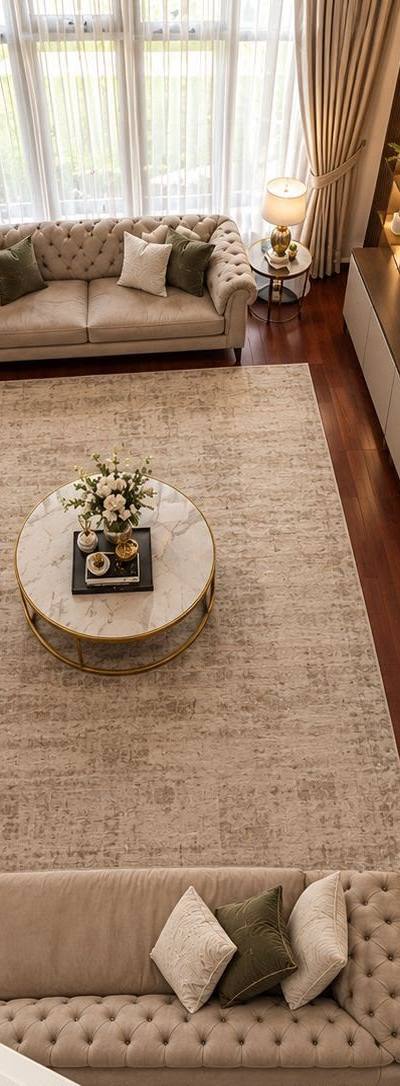
 A completed interior by Monde. The same finishing standard goes into the office pods and welfare areas inside a warehouse.
Warehouse fit out cost in Dubai
Cost is quoted in AED per sq ft of warehouse floor, not per unit, because the same systems spread across the slab.
| Warehouse type | Typical AED per sq ft | What drives it |
|---|---|---|
| Light storage, basic finishes | 100 to 150 | LED lighting, paint, basic welfare, no racking |
| Racked distribution with MEP upgrade | 150 to 240 | Racking, LV upgrade, sprinkler changes, epoxy floor |
| Mezzanine build with office pod | 220 to 350 | Structural mezzanine, stairs, glass POD, AC |
| Cold store and chiller rooms | 280 to 450 | Insulated panels, refrigeration plant, higher power |
Worked example for a 20,000 sq ft racked distribution unit in Dubai Investments Park, keeping the existing shell:
- civil works and a 4,000 sq ft mezzanine: AED 1,100,000
- MEP and LV upgrade with a new DEWA sub-meter: AED 780,000
- sprinkler and Civil Defence modifications: AED 420,000
- epoxy flooring and aisle line marking: AED 340,000
- welfare block and 800 sq ft office pod: AED 380,000
Total: about AED 3,020,000, or roughly AED 151 per sq ft. Racking supplied by the tenant's own racking contractor sits outside this number, as does rent, the shell and any cold room plant.
Free zone and mainland pricing differ less than people expect. The gap is mostly permit fees, consultant charges and Civil Defence requirements, which can add AED 15,000 to AED 60,000 on a mid sized unit. For rates across other asset types, our breakdown of commercial fit out costs in Dubai covers offices, retail and F&B in the same format.
Approvals: free zone versus mainland
Free zone units and mainland units run on different approval tracks, and mixing them up is the most common cause of a stalled warehouse fit out.
JAFZA and National Industries Park units go through Trakhees for the fit out permit, drawing review and inspections. Dubai South and some airport side zones use their own building control teams. Other free zones route building permits through Dubai Municipality even though the trade licence comes from the zone. On the mainland, Dubai Municipality issues the building permit while DET handles the trade licence and activity approval, and both want a licensed contractor with stamped drawings.
Trakhees fit out permit submissions usually need the lease or title deed, your trade licence, the contractor licence and trade licence of the fit out company, stamped architectural and MEP drawings, a structural submission if you are building a mezzanine, Civil Defence drawings for sprinkler and fire-rated partitions, and a DEWA or sub-meter application if the connected load increases.
Step by step, the sequence looks like this:
- Confirm the activity on your trade licence covers storage, distribution or light industrial use.
- Appoint a licensed contractor and consultant, and issue the lease and title documents.
- Submit architectural, MEP and structural drawings to Trakhees, Dubai Municipality or the zone authority.
- Submit fire and life safety drawings to Civil Defence for sprinkler, alarm and compartmentation.
- Apply to DEWA or the zone utility for the extra connected load and sub-meter.
- Collect the fit out permit, mobilise, and book the staged inspections.
- Close out with a completion certificate and Civil Defence sign off before stock moves in.
Our guide to commercial fit out permits in Dubai maps documents, timelines and fees per authority, so this page stays focused on scope and cost.
Phased fit out while the warehouse stays operational
You can fit out a working warehouse without stopping dispatch, but the phasing has to be designed before mobilisation, not improvised on site.
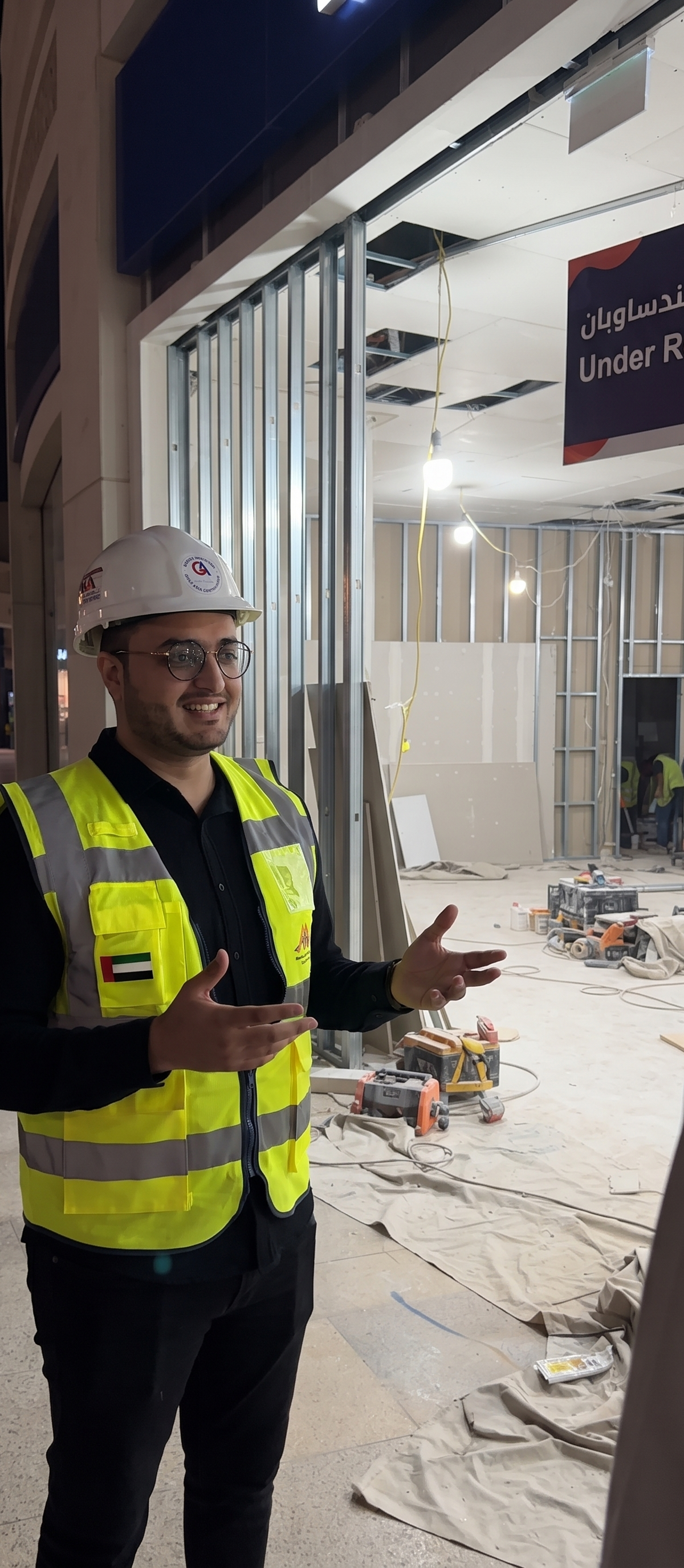
The usual approach is a decant plan. Stock moves into a defined zone first, that area is released, and the contractor works zone by zone behind hoarded partitions. Dust screens, negative pressure units and floor protection go up before any grinding starts. Hot work permits, fire watch and isolated power for welding are agreed with the facility HSE officer. In units handling electronics, we run ESD control on tools and flooring in live aisles.
Where noise or dust cannot be contained, the work moves to night shifts. Racking installs, epoxy pours and MEP tie-ins are usually scheduled for weekends or shutdown windows, with the area handed back clean before the next dispatch shift.
The site was clean when they left. We needed them fast on a running job. They finished the renovation on time. Good work from start to end. Davranbek Tashbayev, 5 stars on Google
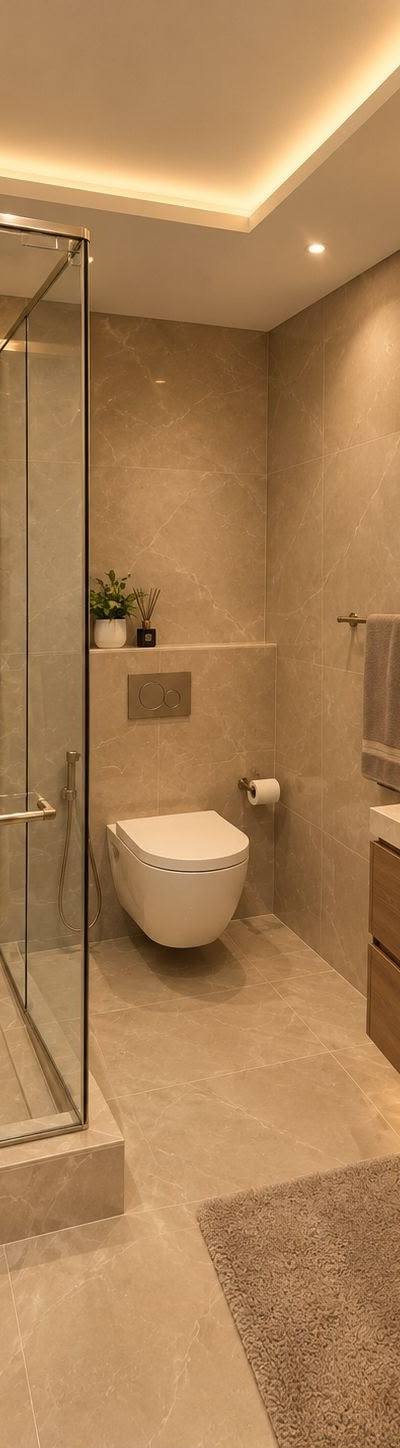
 Finishing quality on a completed Monde project, the same standard we hold on phased and occupied sites.
Timeline from design NOC to handover
Most warehouse fit outs in the UAE run 8 to 16 weeks from design NOC to handover.
- permit and drawing approval: 2 to 4 weeks with Trakhees or Dubai Municipality
- Civil Defence approval: 2 to 3 weeks, longer if a new sprinkler main is needed
- DEWA or zone utility connection: 3 to 6 weeks for a load upgrade
- construction: 6 to 12 weeks depending on mezzanine, cold rooms and racking
- inspection, snagging and completion certificate: 1 to 2 weeks
Projects that stay under AED 150 per sq ft with no structural work and no cold storage usually finish at the lower end. Cold stores, heavy mezzanine and new substation capacity push toward 16 weeks and beyond.
Choosing a warehouse fit out contractor in the UAE
Check four things before you sign: the licence, the workforce, the HSE record and the defect liability.
Warehouse fit out companies in Dubai either employ their own trades or subcontract the whole job after the contract is signed. A company working under its own licence with its own workforce controls quality, sequence and site cleanliness. Ask how many people are on the payroll, and whether the same project manager will be on site every week.
Then confirm:
- a valid trade licence and contractor classification for the emirate
- HSE documentation, method statements and a record on occupied sites
- a defect liability period of 12 months, with the snag list closed before final payment
- a payment schedule tied to milestones, with retention held until completion
Monde handles commercial fit out and renovation across the UAE with our own team of 50 plus specialists and a project manager assigned to each site. If you are planning a warehouse, retail or office project, request a warehouse fit out quote and we will price the scope from drawings or a site visit. Our commercial fit out Dubai page lists the full service range.
Frequently asked questions
How much does a warehouse fit out cost in Dubai?
Expect AED 100 to 150 per sq ft for light storage with basic finishes, AED 150 to 240 for racked distribution with an MEP upgrade, and AED 280 to 450 for cold store. A 20,000 sq ft racked unit in Dubai Investments Park with a small mezzanine came to roughly AED 151 per sq ft. Racking, rent and cold room plant are usually quoted separately.
How long does a warehouse fit out take in Dubai?
Plan 8 to 16 weeks from design NOC to handover. Permits with Trakhees or Dubai Municipality take 2 to 4 weeks, Civil Defence approval 2 to 3 weeks, and construction 6 to 12 weeks. A DEWA load upgrade can add 3 to 6 weeks if the existing supply is not enough.
Do I need a Trakhees permit for a warehouse fit out in JAFZA?
Yes. JAFZA and National Industries Park units need a Trakhees fit out permit before work starts. You submit stamped architectural, MEP and structural drawings, the lease, both trade licences and Civil Defence drawings for fire systems. Working without the permit risks fines and a stop work order.
Can you fit out a warehouse while it is still operating?
Yes, with a decant plan agreed before mobilisation. Stock moves zone by zone, hoarded partitions and negative pressure dust control go up, and noisy or dusty work moves to night shifts or weekends. We complete phased works on live sites with the same discipline on cleanliness our clients mention in their reviews.
What is the difference between a warehouse fit out and a warehouse refurbishment?
A fit out takes a shell and core unit to an operational one, including racking, mezzanine, MEP, sprinkler and welfare block. A refurbishment upgrades a warehouse that already functions, for example new epoxy floors, LED lighting, sprinkler head replacement or an LV panel upgrade. Refurbishments cost less and can often be phased around live operations.